
Coaching to Empower: Ignite Performance & Build Trust
In today’s dynamic work environment, how do you turn good into great? It won’t happen by accident, but it’s not just about instructing; it’s about actively and deliberately coaching to empower.
During this half-day workshop, you’ll learn how to harness your unique coaching style to create a culture of high performance, trust, and safety within your team. You’ll discover how to increase responsibility, self-awareness and self-belief in your people.
We recommend:
In-person or online
3hrs
Up to 20 people
What you’ll learn & do
This workshop empowers your teams to:
- Evaluate your own coaching competency and identify the skills of a great coach
- Use reflective listening to facilitate conversations and get to the root cause of issues
- Know when to “help” in problem-solving, and what that actually looks like done well
- Ensure real ownership by letting people decide their own solution for implementation
- Explore how AI can strengthen coaching conversations with sharper, more insightful questions
94%
of participants would recommend our workshops
Who is this workshop for?
- Anyone who works with or leads other people Managers whose team keeps bringing them problems to solve, rather than solving them together
- Leaders shifting from directing to enabling, without losing pace or accountability
- Anyone wanting practical coaching skills, not a formal coaching qualification
What this workshop offers
- Built around your own style. Not a script to follow, a way to harness the coaching style you already have.
- Learning that lasts. Every participant gets access to the Productivity Ninja® Academy.
- A format that fits. 3 hours, in person or live online, for up to 20 people.
- AI as an ally. Practical ways AI can help clarify problems, generate insightful questions and support more reflective coaching conversations.
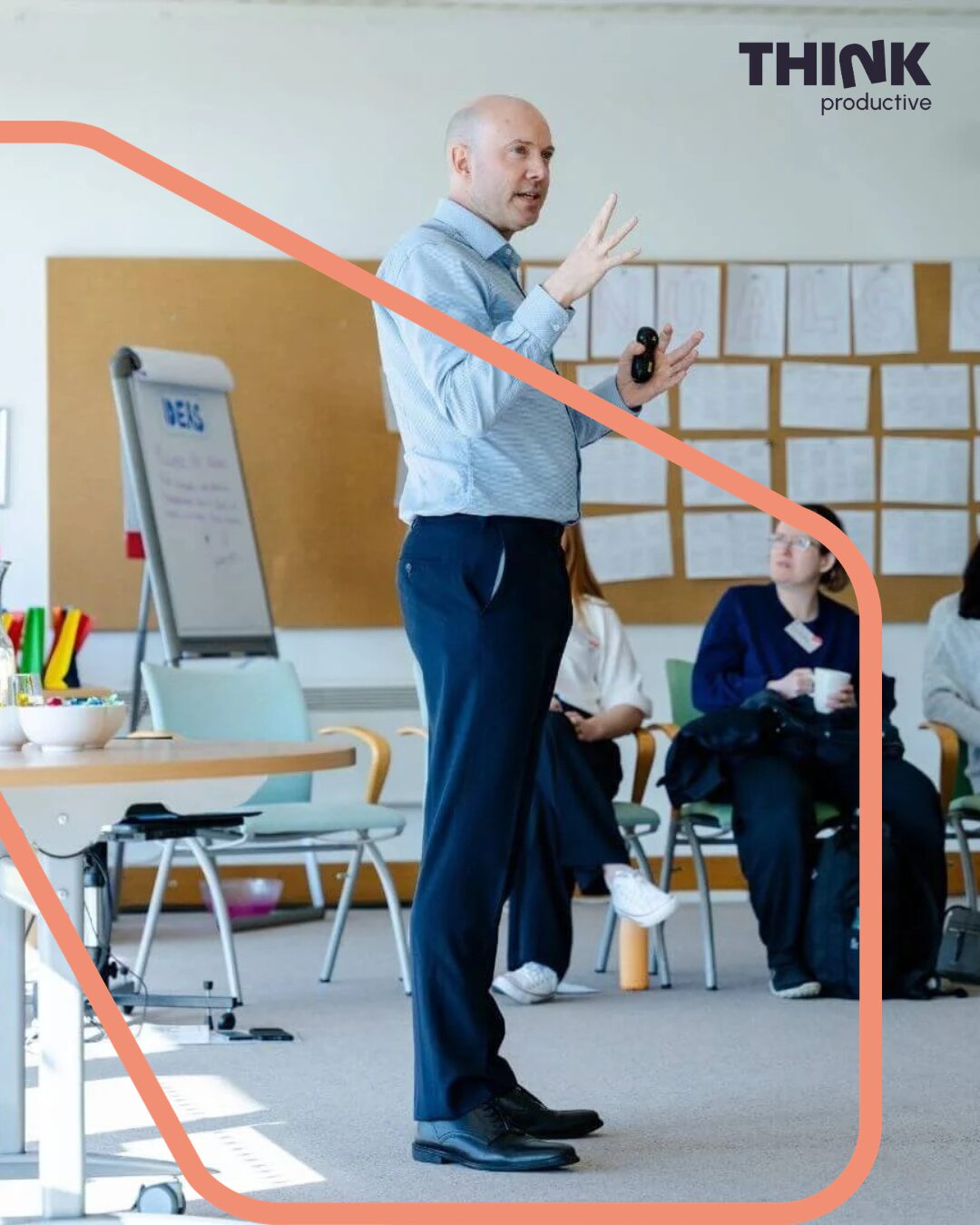
What you’ll do
You’ll start by evaluating your own coaching competency honestly, understanding the specific skills that make coaching effective rather than just well-intentioned. From there, you’ll practice reflective listening, learning to facilitate conversations that get to the root of an issue instead of jumping straight to a fix.
You’ll also work through when to genuinely help someone problem-solve, and when helping actually gets in the way of them owning the solution themselves. Real scenarios and light, optional role-play give you a chance to practice before you need it back at work. You’ll leave with an action and accountability plan, so the shift in how you lead doesn’t fade once the session ends.
What happens when coaching works
When teams learn to communicate with intention, everything changes:
- People bring solutions, not just problems, because they’ve learned to think it through first
- Teams build real self-belief and ownership, instead of leaning on the manager for every answer
- Managers get time back, because they’re not the bottleneck for every decision
- Trust grows, because people feel genuinely supported and challenged, not managed
- Capability spreads across the team, instead of staying concentrated at the top
PQShield
“I’ve learnt to listen more and not try to find solutions too quickly.”
Errol Sloman
Benefits & Results
The most immediate benefit is capacity: managers get time back because they’re no longer the bottleneck for every decision. But the deeper shift is in the team itself. Once people are coached instead of told, they start bringing solutions instead of just problems, and ownership spreads instead of staying stuck at the top.
What your organization gets
Managers who lead through coaching, not just direction. Teams with more self-belief, more ownership, and less dependency on one person having all the answers.
The results
97% of participants rated the session 4 or 5 out of 5 stars
University of Portsmouth
“”I really like the next step plan, it helps me actually use the training rather than forget it.”
Why it matters
Coaching gets talked about as a leadership nicety, when it’s actually the difference between a team that thinks for itself and one that waits to be told.
- Managers default to solving problems for people, because it feels faster in the moment, even though it keeps the team dependent
- Without reflective listening, conversations jump straight to fixes instead of finding the real, root cause
- People aren’t given real ownership of solutions, so accountability never quite sticks
Frequently Asked Questions
-
Yes. Many participants join with little or no coaching experience. The workshop introduces simple, practical techniques that feel natural in everyday conversations, not formal or scripted.
-
No. This is not a certification and it’s not a formal coaching program. It focuses on everyday coaching behaviours that help managers empower people, reduce dependency and improve problem solving in their teams.
-
Very. Participants practice using coaching questions, active listening and reflective techniques in real scenarios. The emphasis is on building confidence through experience, not theory.