
Turn email from time sink to team asset
Overloaded inboxes, miscommunication, and inefficient email habits don’t just waste time, they hinder innovation and create unnecessary stress. This workshop transforms your team’s relationship with email, giving them the skills to communicate clearly, collaborate seamlessly, and reclaim hours of their day. It shares our Productivity Ninja® approach to brilliant email, helping your team think about how their habits affect others and reshape the culture so email becomes an asset, not a burden.
We recommend:
In-person or online
3hrs
Up to 20 people
What you’ll learn & do
This workshop empowers your teams to:
- Productivity Ninja® tips, tricks, and tactics for better email, both individually and as a team
- Strategies to turn email from a source of stress into a tool for collaboration and efficient communication
- Time to reflect honestly on your current email culture, and spot what’s actually hurting productivity and wellbeing
- Hands-on, at-desk implementation, so new habits start the same day, not sometime later
94%
of participants would recommend our workshops
Who is this workshop for?
- Groups where miscommunication over email is creating friction, duplicated work, or missed context
- Leaders who want their team spending less time managing email and more time doing the work that matters
What this workshop offers
- Learning that lasts. Every participant gets access to the Productivity Ninja® Academy, so the habits from the session don’t fade once the workshop ends.
- Half theory, half practice. 50% group training and discussion, 50% individual at-desk implementation, so people leave having actually done the work, not just heard about it.
- A full 3-hour session, built for meaningful, lasting change rather than a quick tips-and-tricks overview.
What you’ll do
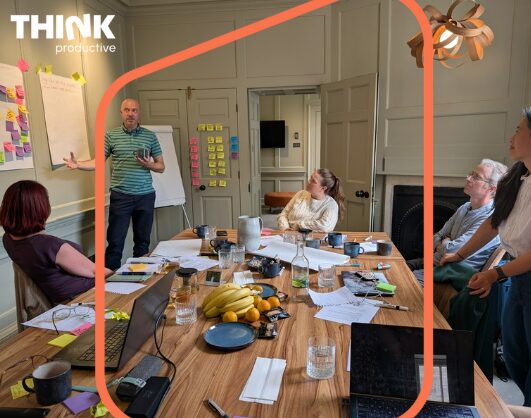
Half the session is group training and discussion: exploring Productivity Ninja® tactics, unpacking what’s really driving your team’s email overload, and reflecting honestly on the habits and culture that got you here. The other half is individual, at-desk implementation, putting new habits into practice in your own inbox, with support in the room while you do it.
What happens when email works
When a team fixes its relationship with email, the change is immediate and visible:
- Inboxes stop running the day, people do
- Fewer miscommunications, less duplicated work, less back-and-forth
- Genuine focus time returns, instead of constant email-checking
- Collaboration improves because messages are clearer and more intentional
SHELTER
“Investing in this workshop was one of the best decisions we made for our people and culture.”
Sarat Kumar, CEO, Shelter
Benefits & Results
Immediate benefits
- A clearer, calmer inbox by the end of the session
- Practical tactics for writing, organizing, and responding to email more efficiently
- A team that’s reflected honestly on its own email culture, not just been told to “check email less”
- Real momentum, since half the session is spent actually applying the changes, not just discussing them
What your organization gets
- Momentum that compounds: once one team changes its habits, it tends to spread to how they email everyone else too
- Teams spending less time managing email and more time on the work that actually moves things forward
- Fewer miscommunications and less duplicated effort caused by unclear or overloaded inboxes
- A healthier default culture around email, rather than one where everyone’s expected to be always-on
J.P.Morgan
“This workshop completely changed the way our team communicates, we’re clearer, faster and less stressed.”
Sarah M, Project Manager
Why it matters
Most teams don’t have a technology problem, they have a habits and culture problem, and email has become the place where it shows up most.
- Overloaded inboxes swallow hours that should go toward real work
- Miscommunication over email creates friction, duplicated work, and missed context
- Inefficient habits don’t just waste time, they quietly hinder innovation and add unnecessary stress
Frequently Asked Questions
-
3 hours, for groups of up to 20. Small enough to stay genuinely hands-on.
-
Yes, and new habits start the very same day.
-
It’s about the habits and culture behind email, not just a few quick tricks.